Product development
Developing what inspires.
TB Müller develops plastic and metal components from the first sketch to the released production part. We handle concept development, CAD design, simulation, prototyping and series support — and lay out every component for manufacture and tooling from the very first phase. This is possible because tool design and special-purpose machinery sit in the same house: whoever builds the tool later is at the table for the first concept discussion.
- Scope
- Concept · Design · Simulation · Prototyping · Series support
- Sectors
- Sport · Automotive · Home & gastronomy · Forestry & garden · Packaging · Industry & toolmaking · Medical · Start-ups
- CAD systems
- Siemens NX · CATIA · Creo / ProE · SolidWorks · Solid Edge
- Capacity
- 25 CAD workstations · around 40,000 design hours per year
- Location
- Fulpmes, Stubai Valley (Tyrol) — plus Neustift and Mieming
What we develop
Four fields of application in which we have been developing series components for over thirty years. The lists are not statements of intent but delivered projects.
Sport
Components at the limit of the material: weight counts, safety is not negotiable. We accompany these developments with FEA and on-snow testing throughout.
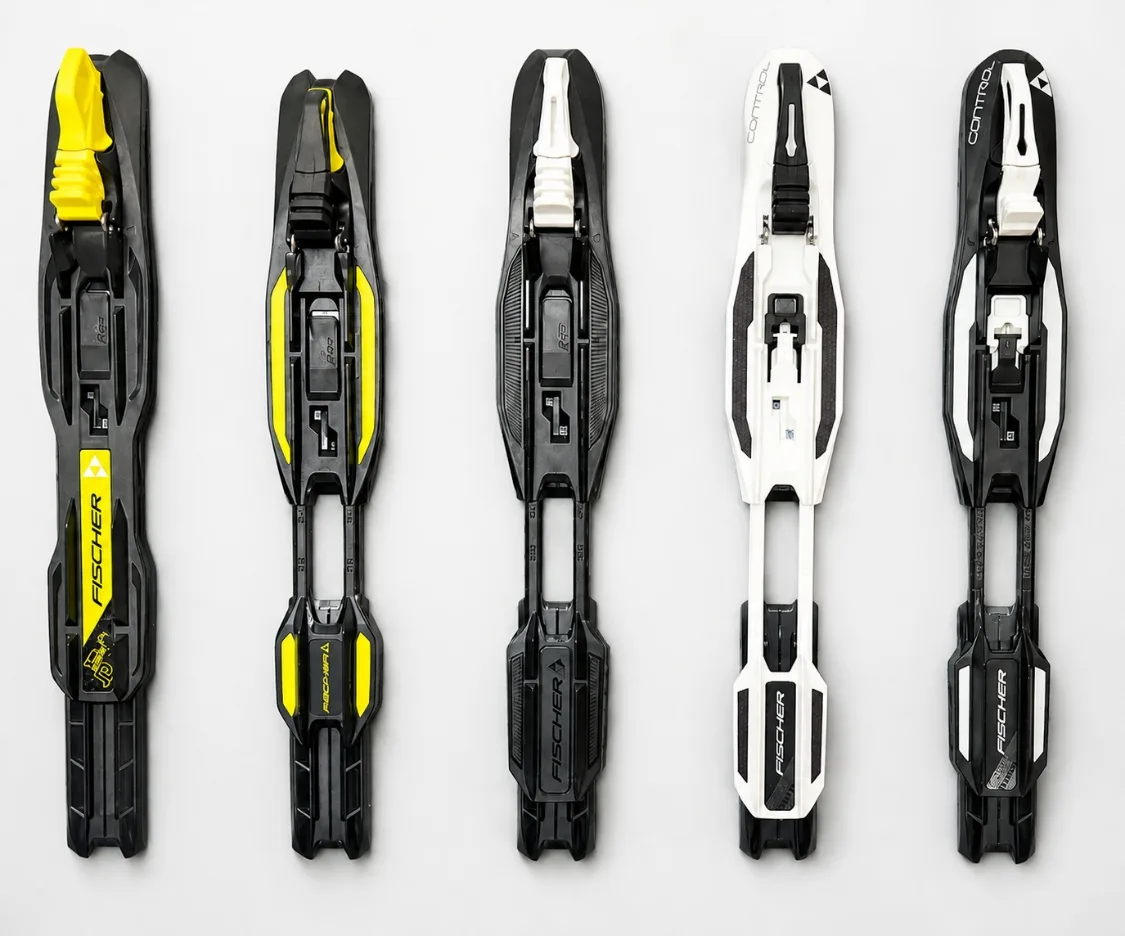
- Ski and snowboard bindings
- Binding plates
- Climbing aids
- Skin attachments
- Ski boot components and outer shells
- Ice axes and crampons
- Carabiners
Automotive
Visible and functional parts with high demands on surface quality, tolerances and kinematics — designed with consistently high surface quality.
- Rear spoilers
- Fender trims
- Interior parts
- Fuel flap systems
- Radiator grilles with grid structures
- Handbrake levers for trailers
Home & gastronomy
Appliances where mechanics, electronics and cleanability come together in a compact space — from air routing to sealing strategy.
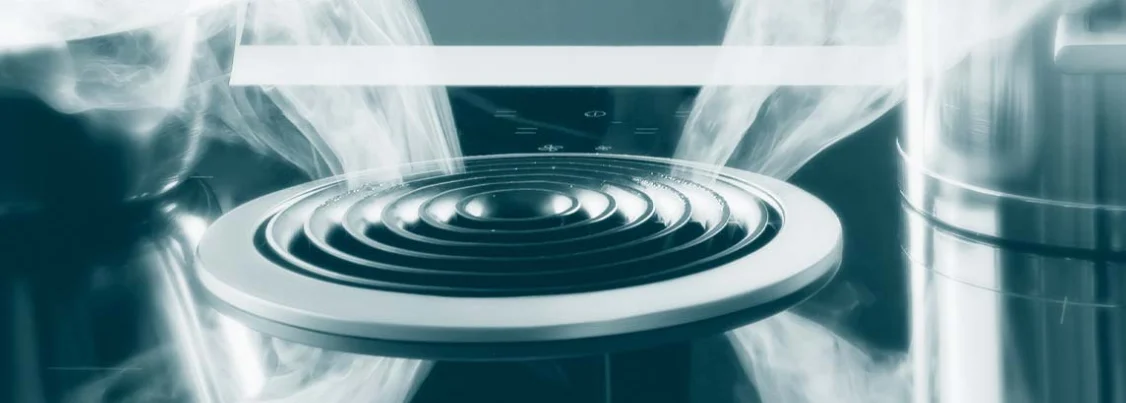
- Cooktop extractor systems
- Grain mills
- Cooking appliances
- Cleaning appliances
- Dispenser and hygiene systems
Forestry & garden
Tools that must survive rough use. Here ergonomics, balance and the bond between metal and plastic determine product quality.
- Lawn mower components
- Axes and garden tools
- Tools with overmoulded metal parts
- Multi-component grip systems for improved look and feel
Core engineering competences
High-quality free-form surfaces
Doubly curved surfaces with continuous, mirror-smooth transitions — the prerequisite for premium appearance and clean light reflection. We also design organic, non-repetitive textures directly into the surface.
FEA simulation
Simulate load cases, identify critical areas, optimise geometry — before the first prototype is built. Indispensable when weight must be saved without compromising operational safety.
Tolerance analysis
We dimension parts so that automated assembly works reliably. In series production this step determines scrap rates and cycle times — and it is frequently done too late.
Multi-component and special processes
2K moulding, gas injection technology, insert and overmoulding techniques. We design parts that genuinely allow these processes — including flow and filling studies before tool design.
Electronics integration
Boards, drives, pumps and loudspeakers are integrated into the design from the start — thermally, mechanically and for manufacture, not placed into a housing after the fact.
Prototyping
Functional samples via established partners: stereolithography, SLS and laser sintering, vacuum casting. Every variant is built, tested and fed back into the next optimisation loop.
How a project runs with us
Six phases, one continuous responsibility. The decisive difference lies in our decades of know-how — and it begins right in phase 01.
-
1
Concept
From a specification or sketch we develop several engineered variants, assessed by packaging, manufacturing effort and assembly — not by taste alone.
-
2
CAD design
Detailed design in your CAD system, including assembly structure and interfaces to supplied parts.
-
3
Simulation
FEA and tolerance analysis. Critical areas are optimised before tooling costs arise.
-
4
Prototype
Build, test and inspect functional samples in-house. Results feed back into product development and design.
-
5
Tooling
Tool layout and design in-house, followed by sampling and dimensional inspection.
-
6
Series
Release, series support and management of revision levels across the product life cycle.
Prototyping in-house
Functional samples are made in our own house — printed, milled or cast. Because design and prototyping sit side by side, an iteration loop takes days instead of weeks: a sample is built, tested, and the findings flow straight back into the CAD data.
3D printing
Functional parts and packaging models overnight — for fast concept decisions and first installation trials.
Milling
Milled samples in plastic, aluminium or steel when material and strength must match the series part.
Silicone casting
Seals and elastic parts cast in silicone: mixing, vacuum degassing, casting, demoulding.
Injection moulding
Injection-moulded prototypes and small batches from a prototype tool — a series-like process with the series material.
Frequently asked questions
Do you also take on individual project phases?
Yes. Many clients bring us in for a defined phase — an FEA, a free-form surface model or a tolerance analysis. Just as often we take a project from sketch to series release. Both are established.
Which CAD system do you work in?
We design in Siemens NX, CATIA, Creo / ProE, SolidWorks and Solid Edge. This means we usually work directly in your system landscape, without conversion losses at the interfaces.
How large is your design capacity?
We operate 25 CAD workstations with a design capacity of around 40,000 hours per year, spread across our sites in Fulpmes, Neustift and Mieming in Tyrol.
What does a product development cost?
That depends on part complexity, number of variants and testing scope. A reliable statement is only possible after an initial discussion covering specification, volumes and target costs.
Do you also develop for start-ups and small series?
Yes. A share of our projects comes from start-ups needing a first series-capable product. Manufacturing experience brought in early pays off here in particular, because tooling and unit costs are set in this phase.