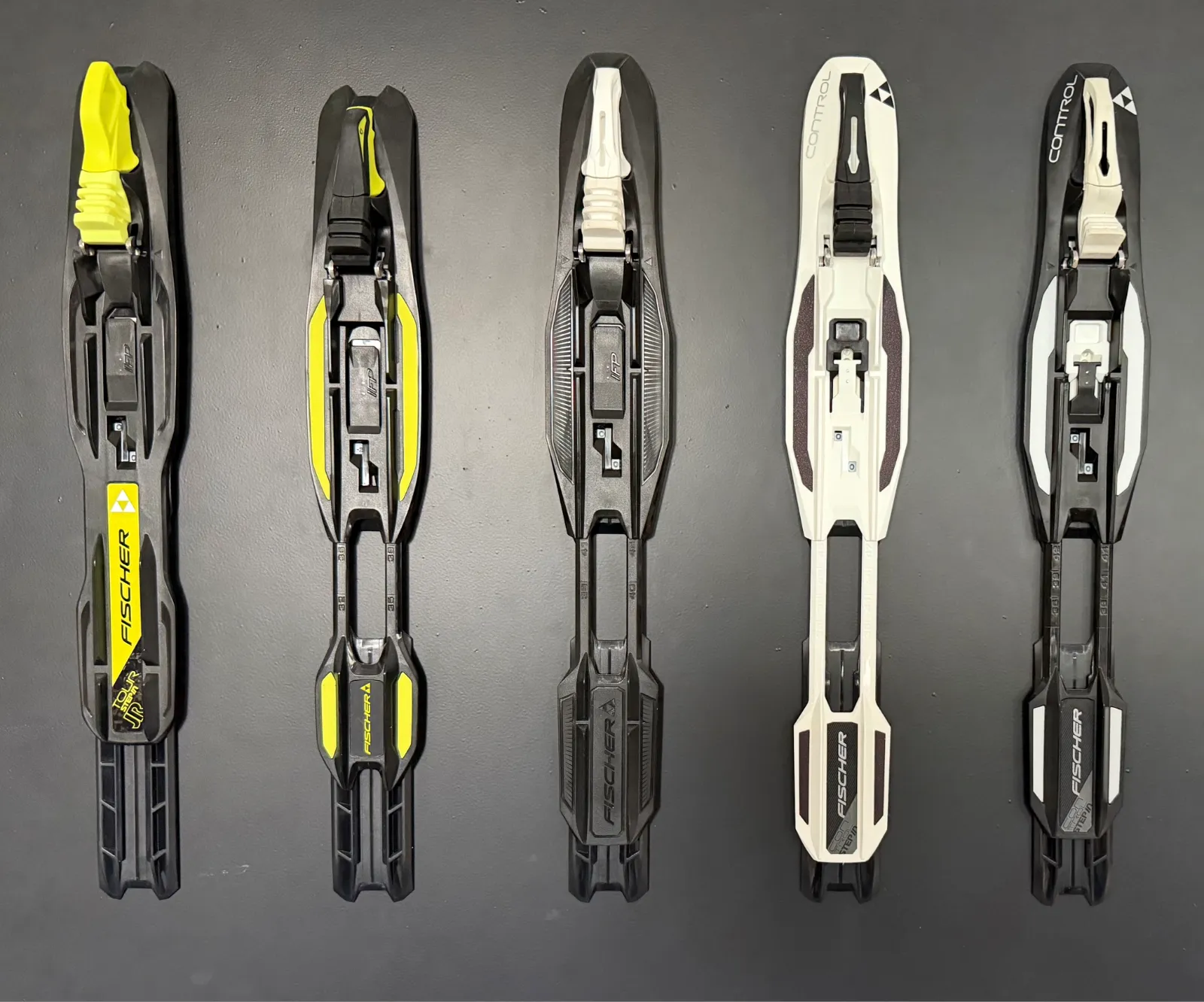
Fischer cross-country binding
New development of a binding system
- Client
- Fischer
- Sector
- Sport
- Scope
- Engineering · FEA · Tooling
For Fischer we developed an entirely new cross-country binding system. The starting point was a strategic decision: Fischer had been sourcing bindings from external suppliers and chose to take development in-house. That opened up the opportunity to conceive a completely new binding system from first principles.
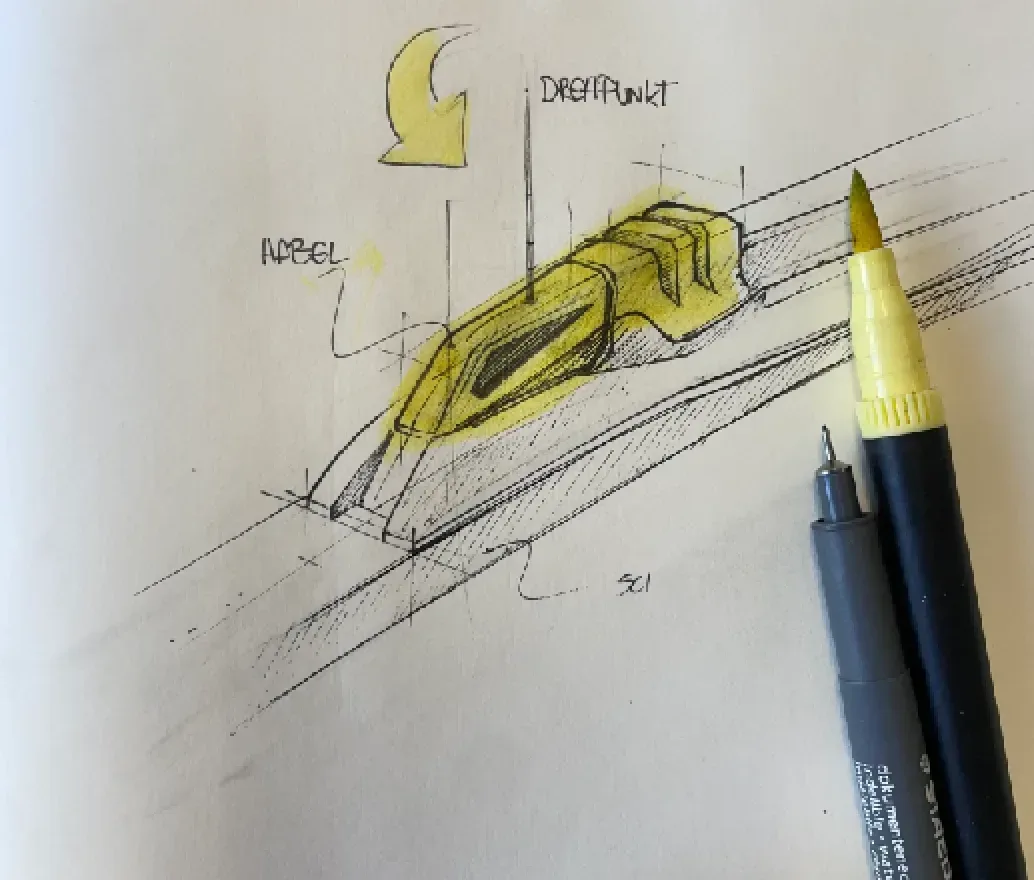
From sketch to concept
Based on the sketches we developed several technically redesigned concept variants for the binding and its binding plate. Each variant was engineered further and assessed in close coordination with Fischer — with the goal of balancing function, step-in comfort and ride characteristics.
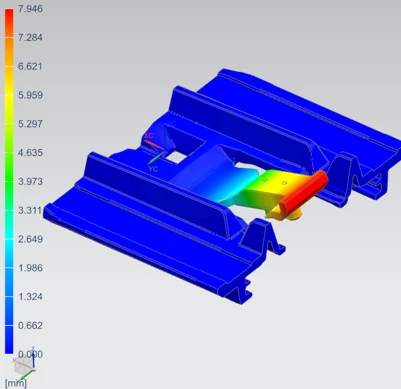
Strength, weight and tolerances under control
Because saving weight is a central development goal for cross-country bindings, the design repeatedly had to be taken deliberately to the technical limit of the material used. To guarantee operational safety, development was accompanied throughout by FEA: load cases were simulated, critical areas identified and the geometry optimised before it went into the next prototype stage.
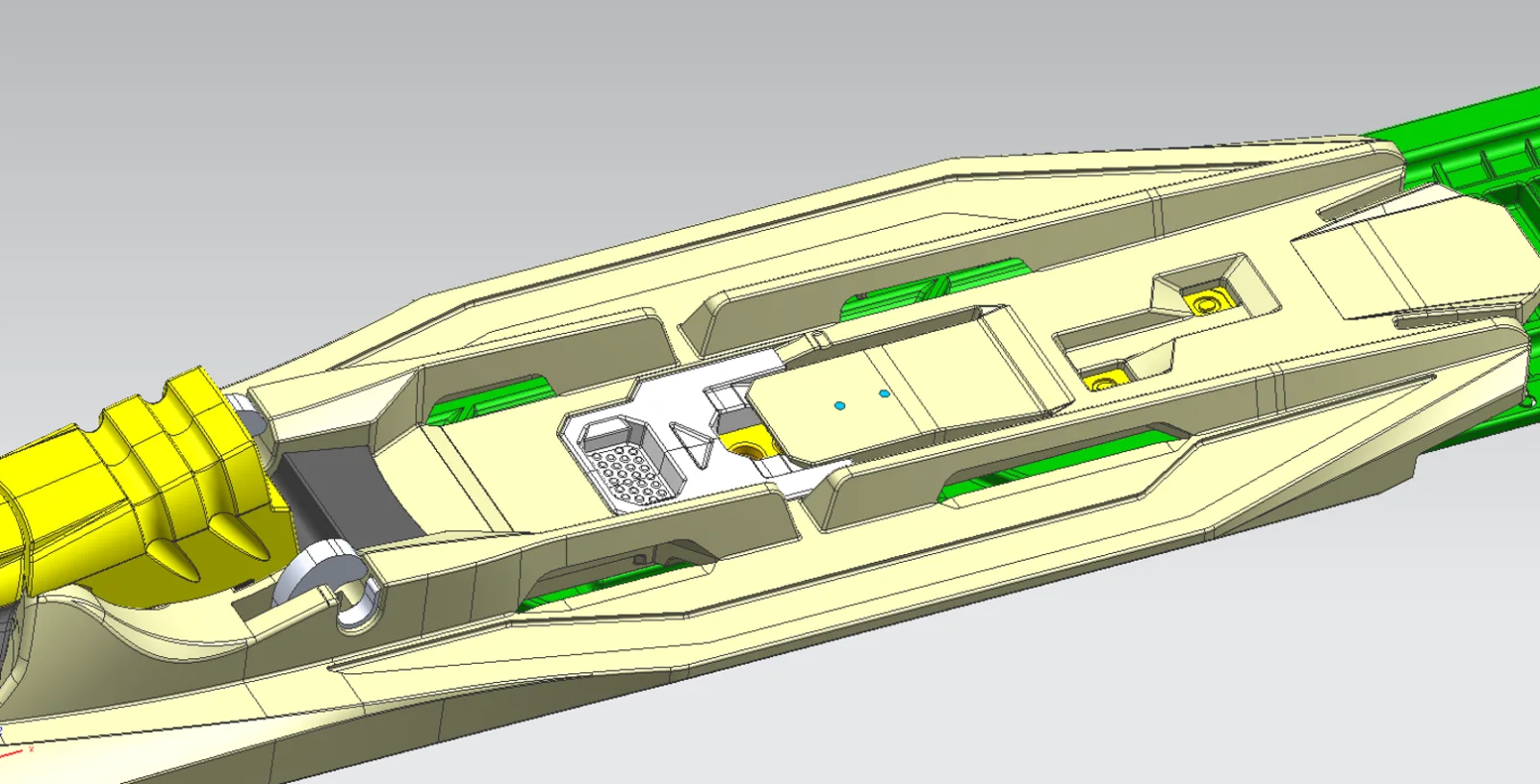
Engineering with series production in mind
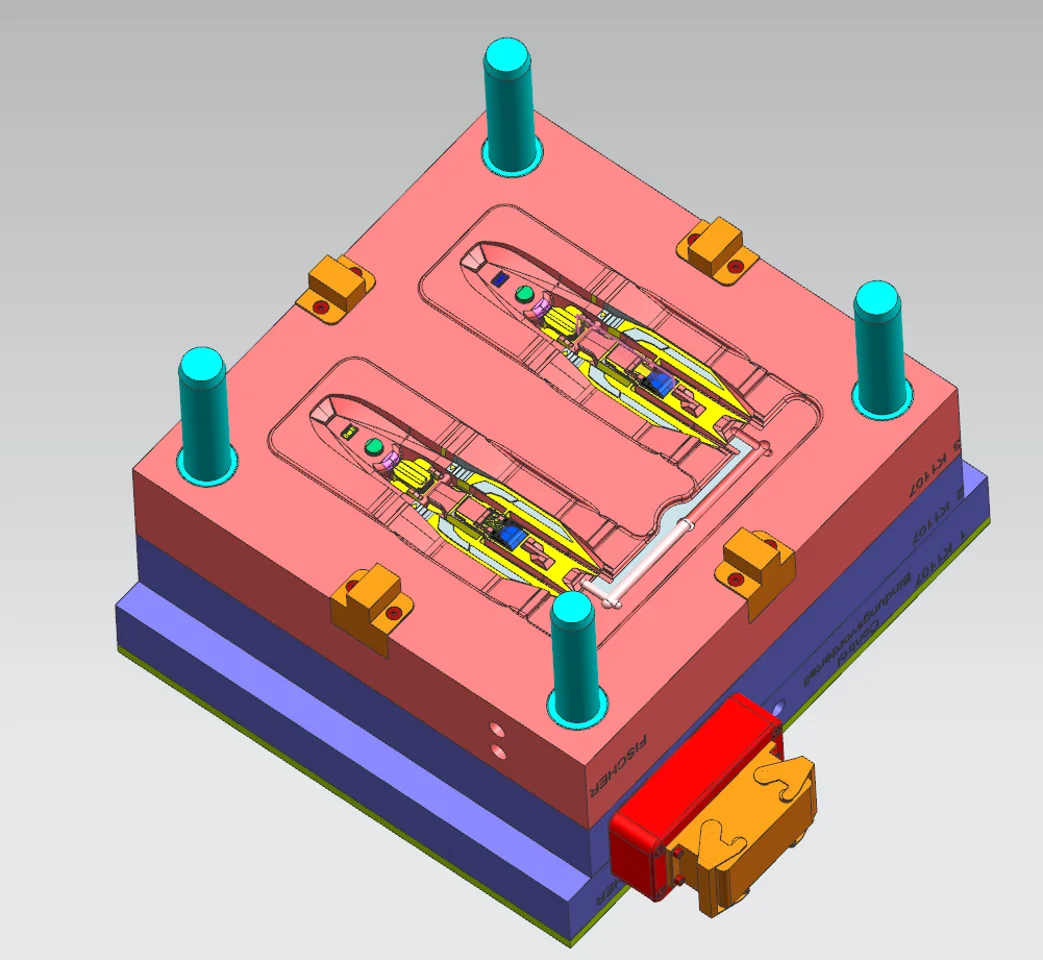
To make series production run smoothly, we also designed the injection moulds ourselves. Ahead of tool design we used tolerance analyses to dimension the parts so that automated assembly of the binding works reliably — a step that determines scrap rates and cycle times in series production.
Prototyping and testing
Every variant developed was built as a prototype and continuously tested for function, step-in behaviour and ride characteristics — from first functional samples to prototypes for testing directly on snow. The results of each test phase fed straight into the next optimisation loop of design, FEA and manufacturing layout.
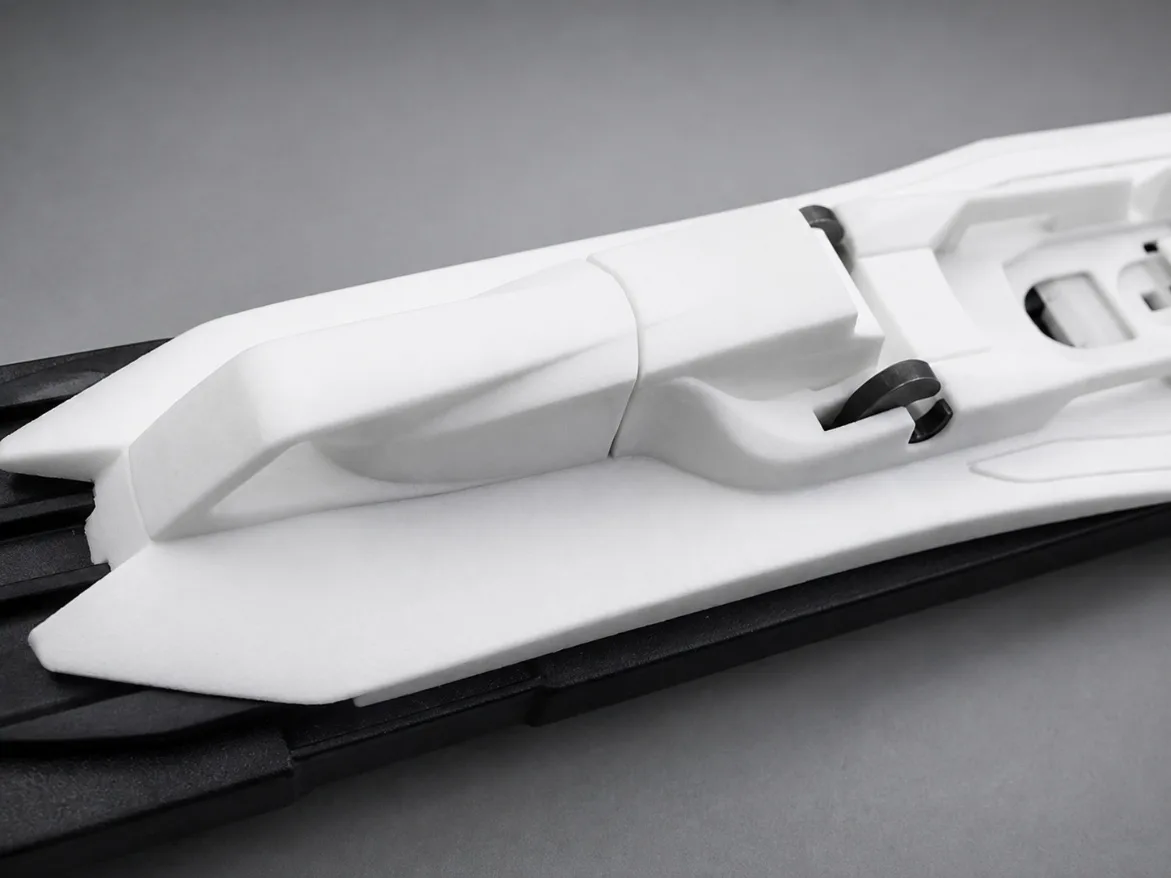
Fischer's strategic decision to develop bindings in-house resulted — together with us — in a complete, independent binding family: from the first sheet of sketches through prototype phases, material tests, FEA and tolerance analyses to series tooling designed in-house. Every variant was validated with sampling and dimensional inspection before reaching market readiness.
A component designed at the limit of its material tolerates no gap between simulation, design and production tooling. That is precisely where the work lay in this project.