
Free-form surface design and tooling
Engineering range at TB Müller
- Client
- Across industries
- Sector
- Capability
- Scope
- Free-form surfaces · Moulding design
A central pillar of our engineering competence is the design of complex free-form surfaces. Whether ergonomic product design, technically functional part geometry or demanding decorative surface structures: our engineers are equally at home with modern CAD surfacing tools and with the injection-moulding design of the resulting parts — from draft angles and wall thicknesses to a tool-friendly parting line.
Ergonomic free-form surfaces: ski boot
A ski boot combines complex, doubly curved free-form surfaces with high demands on ergonomics, fit and appearance. The outer shell was designed entirely with continuous, mirror-smooth surface transitions — a prerequisite for a premium appearance and clean light reflection on the finished part.
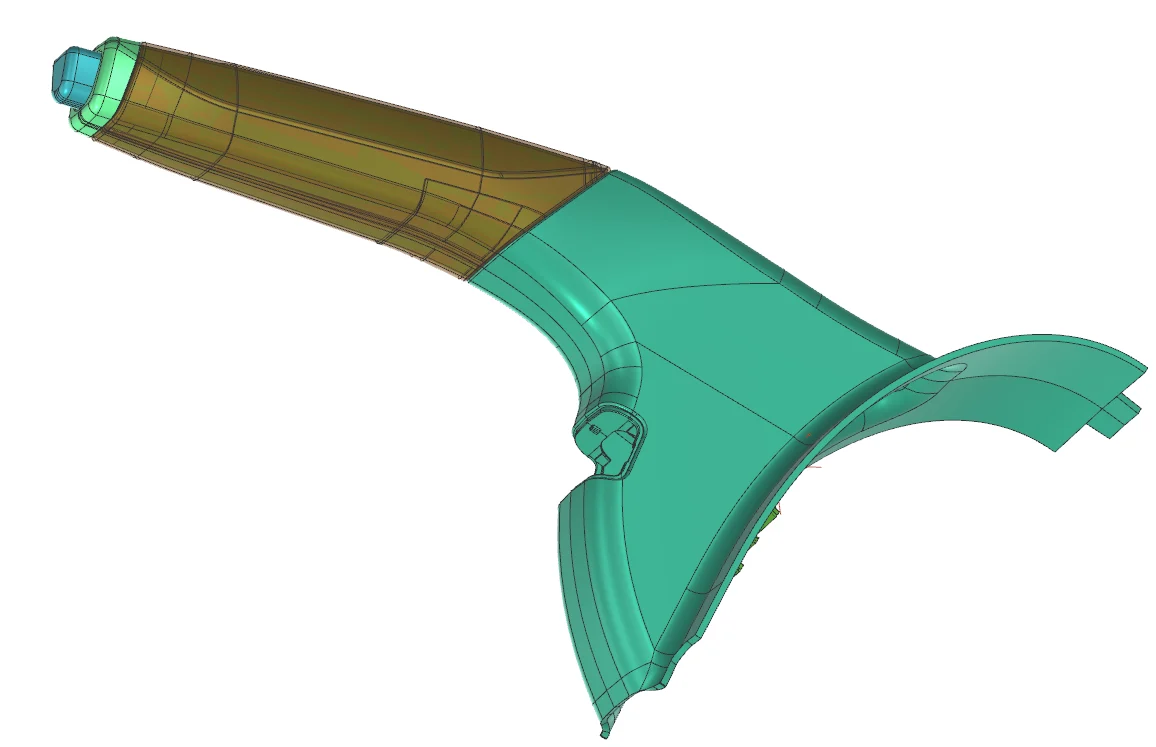
Technical free-form surfaces: trailer handbrake
In the trailer handbrake, free organically shaped grip surfaces meet clearly defined technical areas such as bearings, connections and load transfer points. The challenge is to let styled free-form surfaces and dimensionally precise functional surfaces flow tangentially into one another without jeopardising later manufacturability in the injection mould.
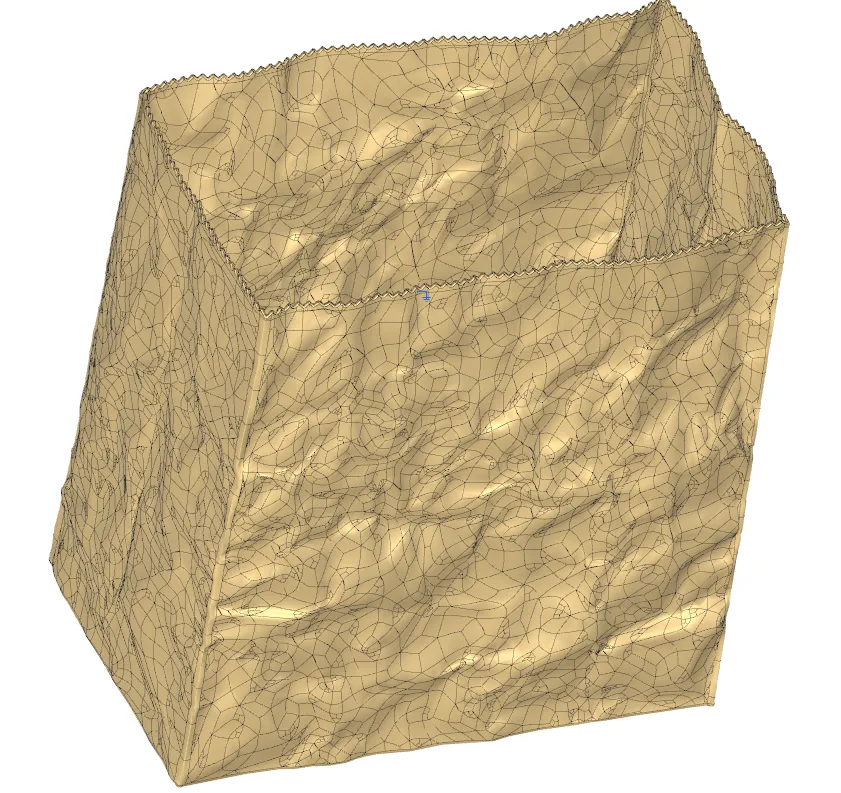
Free-form surfaces with texture: shopping basket
For this shopping basket a deliberate, irregular crumple structure was designed directly into the free-form surface. Such organic, non-repetitive textures demand an especially high level of CAD surfacing skill, since every single fold must remain continuous, demouldable and cleanly reproducible in the tool.
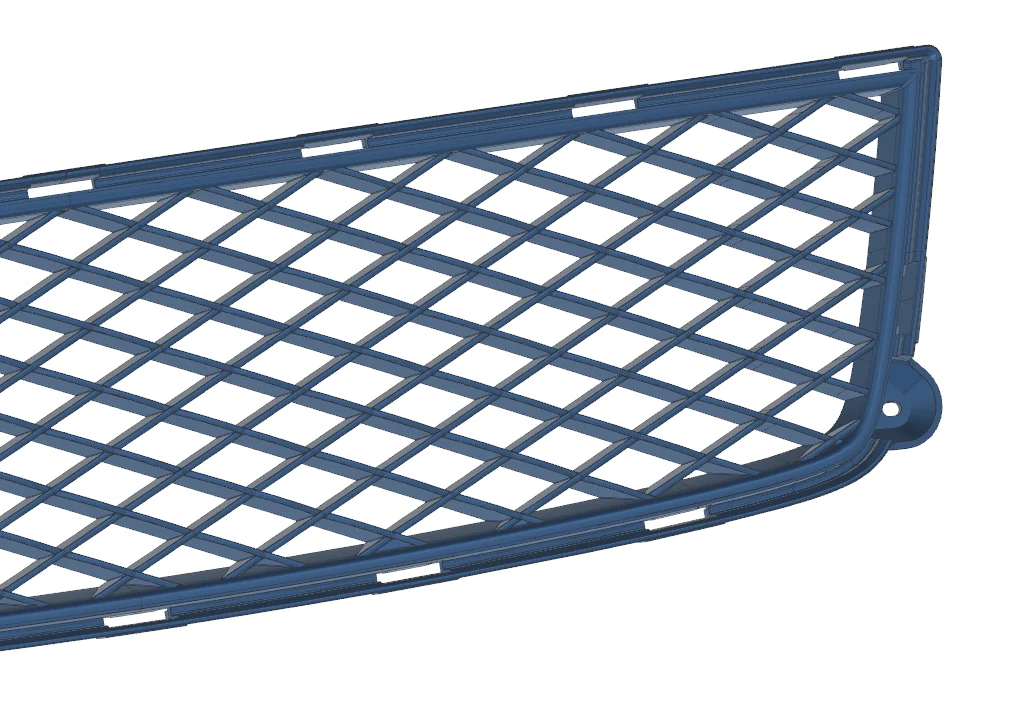
Functional surfaces in a grid: radiator grille
The radiator grille shows the combination of a large free-form surface and a precise, repeating diamond pattern. Every single rib of the pattern follows the underlying free-form surface exactly while remaining demouldable and of uniform wall thickness — a task in which CAD surfacing competence and moulding understanding interact directly.
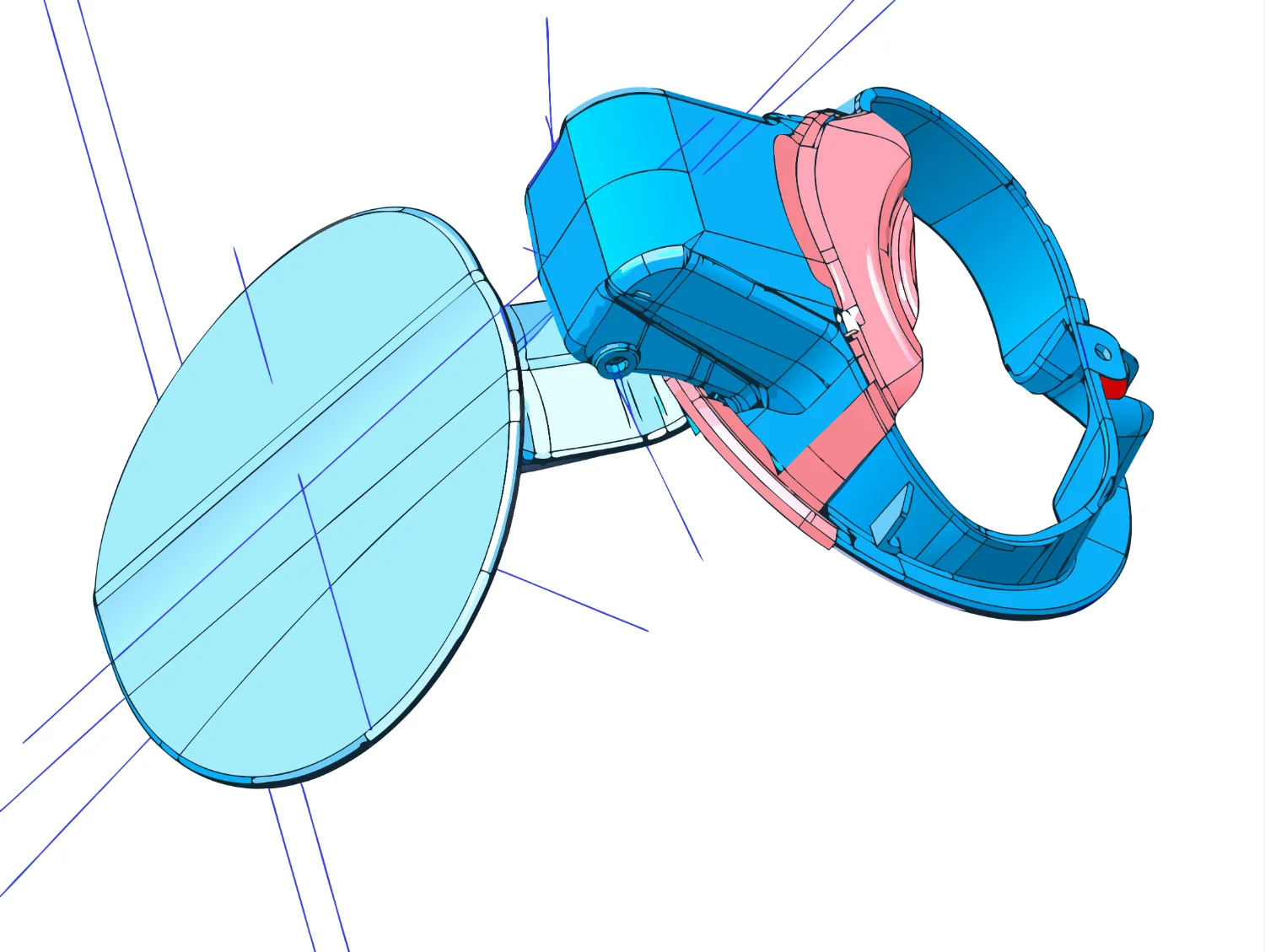
From concept to kinematics: fuel flap system
As a principle study, the fuel flap system shows how free-form surface design is interlocked with kinematics and mechanism layout in the earliest concept phases. Before parts are detailed we examine motion sequences, packaging and component interaction — producing concepts that can be developed consistently through to series production, technically and visually.
Whether sporting goods, commercial vehicle component, retail product or automotive part — the task is the same across all these industries. What matters is the interplay of creative freedom in CAD and the constraints of injection moulding — demouldability, wall thicknesses, parting lines and tool concept.
The result is parts that not only look convincing but can also be produced economically and reliably in series.